
There are few backyard visitors as rewarding to watch as bluebirds. Their brilliant blue feathers, warm rust-colored chests, and gentle habits make them some of the most memorable birds at a feeding station—especially when you offer the food they are most likely to notice.
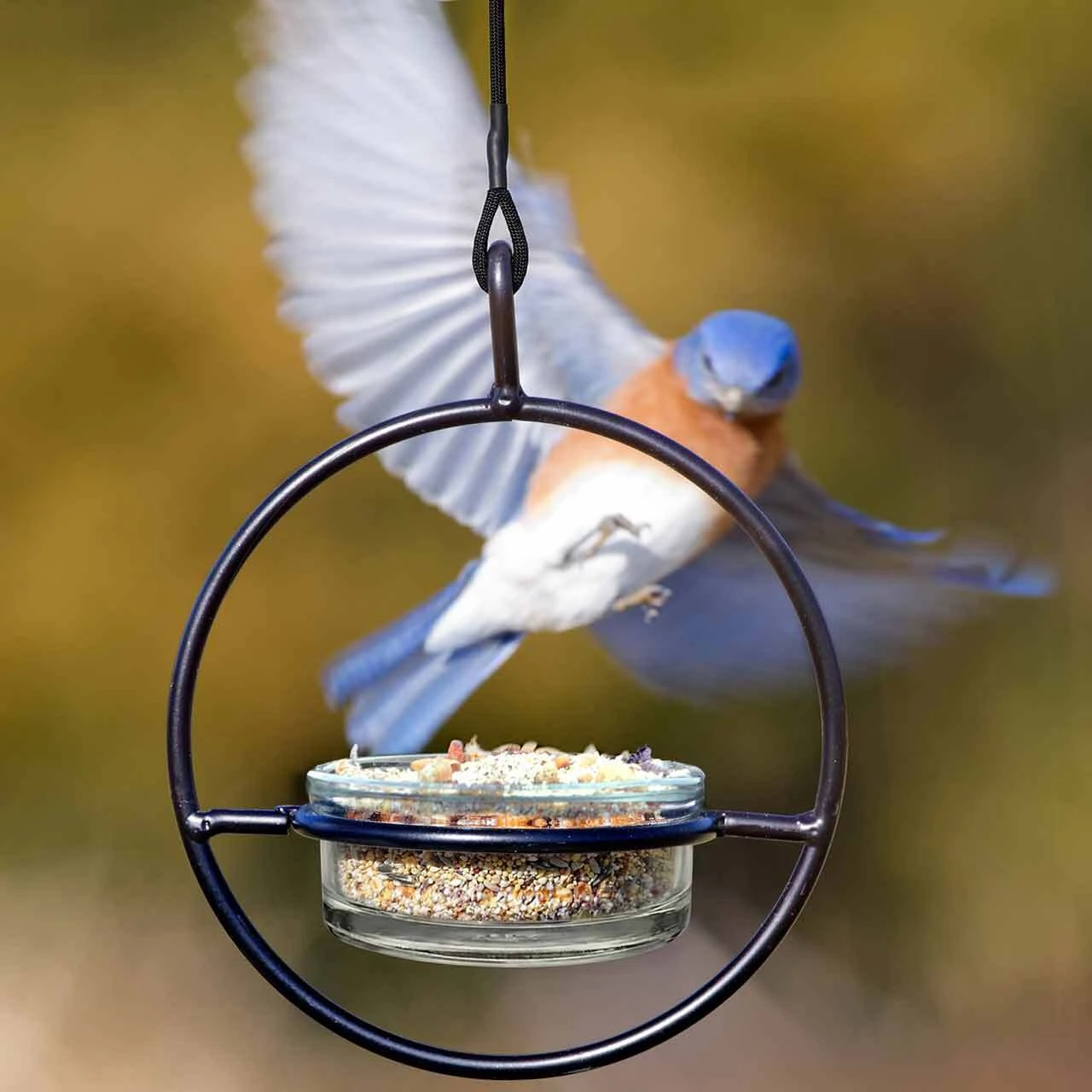
And if you want to encourage bluebirds to visit regularly, there is one food that tends to get their attention: mealworms.
Unlike many familiar backyard birds, bluebirds are primarily insect eaters during much of the year. Cornell Lab notes that Eastern Bluebirds do not commonly visit traditional feeders unless mealworms are available, while Western Bluebirds can also be attracted to feeders with mealworms. All About Birds
For bird lovers who discover that one visiting bluebird soon becomes a pair, a family, and sometimes an increasingly active flock, the right feeder can make serving mealworms easier, cleaner, and more enjoyable to watch.
That is where the Mosaic Birds Hummble Mealworm Feeder becomes especially useful.
Below, we will look at why mealworms appeal to bluebirds, how to serve them responsibly, and why the Hummble feeder's open glass-and-metal design is especially practical as feeder activity grows.
Why Do Bluebirds Love Mealworms?
Bluebirds naturally spend much of their time hunting insects. Eastern Bluebirds commonly perch above open areas, scanning the ground before dropping down to capture insects below. Insects make up an important portion of their natural diet, particularly during warmer months. All About Birds
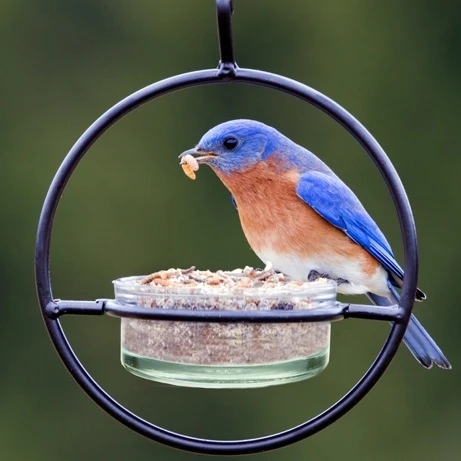
Mealworms provide a convenient way to supplement that natural feeding behavior.
Cornell Lab describes mealworms as an especially appealing food for insect eating birds like bluebirds and notes that both live and dried mealworms can help attract adult bluebirds to feeding stations. All About Birds
Mealworms can become particularly useful during periods when natural insects are harder to find. The North American Bluebird Society also identifies mealworms as a supplemental food that can help bluebirds during severe weather or periods when natural food becomes scarce. North American Bluebird Society
They are not meant to replace a bluebird's varied natural diet. Think of them as a valuable supplement and an irresistible reason for bluebirds to check your yard regularly.
Live or Dried Mealworms?
Both can attract adult bluebirds.
Live mealworms most closely resemble the insects bluebirds naturally hunt, and their movement can be especially enticing to birds that have not yet learned to visit a feeder.
Dried mealworms are considerably easier to store and serve, making them a convenient choice for everyday backyard feeding once birds recognize the dish as a food source.
Some bird lovers introduce dried mealworms by mixing them with a small quantity of live mealworms until visiting bluebirds become familiar with the feeding station.
One important distinction applies during nesting season. The North American Bluebird Society recommends live rather than freeze-dried mealworms when mealworms are being supplied as food for bluebird nestlings, since nestlings receive moisture through their food. North American Bluebird Society
Meet the Mosaic Birds Hummble Mealworm Feeder
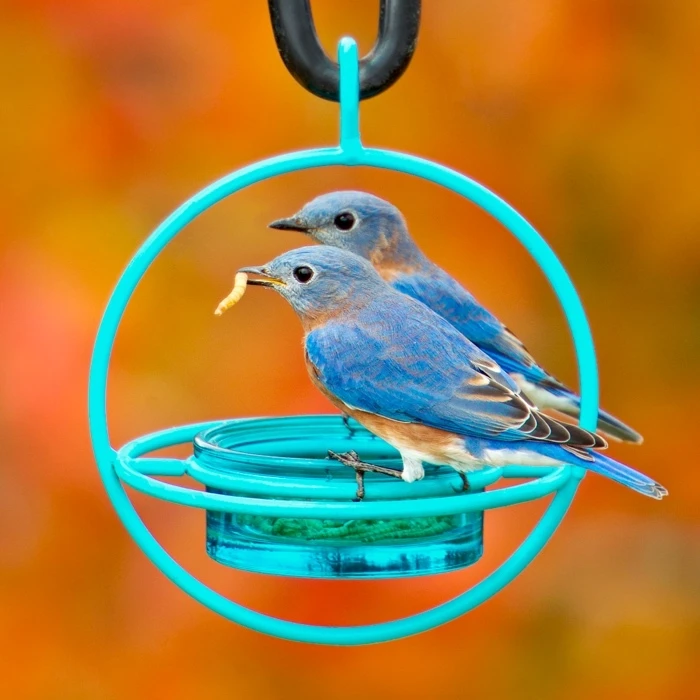
A mealworm feeder does not need to be complicated to work beautifully.
The Mosaic Birds Hummble Basic, Hummble Slim or Hummble Bold Bird Feeders use a refreshingly simple design: a removable glass feeding dish surrounded by a slender metal ring, creating an open feeding station that is easy for birds to approach and easy for people to maintain.
That simplicity is exactly what makes the Hummble bird feeder particularly well suited for bluebirds.
An Open Design Bluebirds Can Approach Easily
Bluebirds naturally hunt from exposed perches and open spaces, so an unobstructed feeder can feel familiar and approachable. The Hummble Slim lets visiting birds reach the mealworms without navigating deep feeding ports or an enclosed feeder.
The circular metal frame also creates convenient places for birds to land, pause, and position themselves around the feeding dish.
For the person watching from the kitchen window, patio, or garden, the openness has another advantage: exceptional visibility of the birds while they feed.
And that is half the fun.
A Glass Dish Made for Mealworms
At the center of the Hummble Slim is a removable glass dish that keeps mealworms visible, contained, and easy to refresh.
Mealworms are different from ordinary birdseed. They are best served in a contained dish where they remain concentrated and easy for birds to discover rather than disappearing into grass or landscaping.
The North American Bluebird Society specifically recommends using a feeder for mealworms because worms placed directly on the ground can disappear into the soil or quickly be consumed by other birds. North American Bluebird Society
The Hummble bird feeder keeps the food exactly where you want it while allowing bluebirds and other insect-eating birds to perch immediately beside it.
The glass construction also makes it easy to see when the dish needs additional mealworms or cleaning.
A Plastic Free Feeding Dish
Made from glass and metal, keeping plastic away from the food your birds eat. As plastics weather and break down, they can contribute to microplastic pollution, and research increasingly links microplastic exposure in birds with inflammation, tissue damage, and other health effects. Choosing a glass and metal feeder is one simple way to reduce unnecessary plastic around their food.
Easy Cleaning Matters When Your Feeder Gets Busy
A popular mealworm feeder can become a very busy place.
Regular cleaning helps keep a feeding station healthy as more birds begin visiting. Mosaic Birds recommends cleaning feeders approximately every two weeks, and more frequently during wet weather or periods of heavy feeder activity. Mosaic Birds Blog
The Hummble family's combination of removable glass and metal components helps simplify that routine. Remove the dish, discard old food, wash and rinse thoroughly, allow everything to dry, and refill with fresh mealworms.
That straightforward maintenance becomes increasingly valuable once your occasional bluebird visitor turns into a regular crowd.
One Bluebird Feeder Can Become Three
Perhaps one of the Hummble bird feeders most useful characteristics appears when your flock begins to grow.
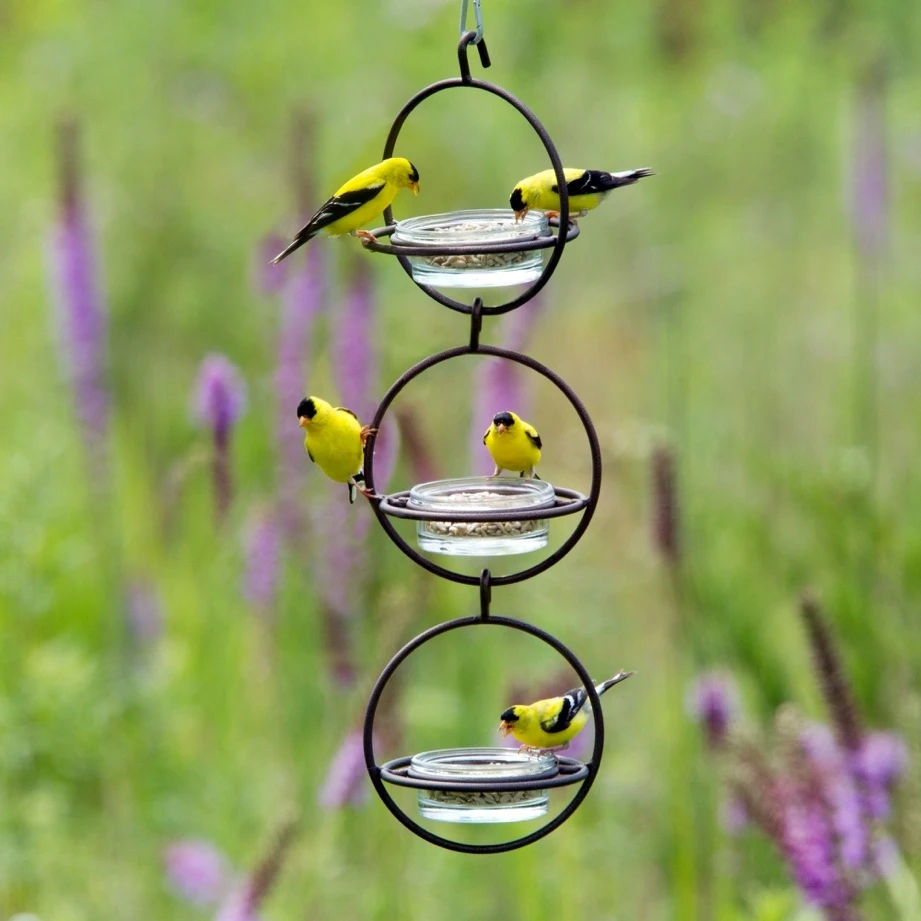
The feeders can be connected vertically.
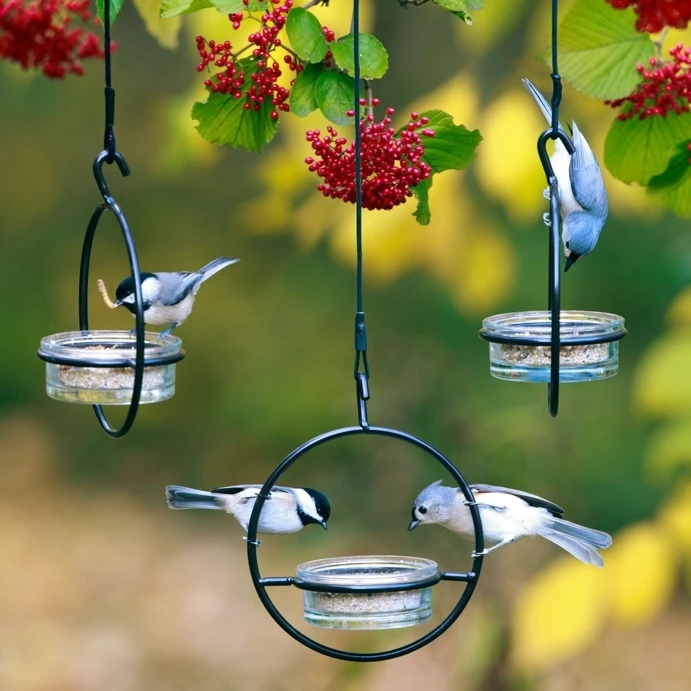
Instead of dedicating several separate hanging locations to individual feeders, multiple Hummble feeders can be connected vertically to create a compact mealworm station with more feeding access in the same general space.
Three compact feeding dishes can give several birds access to mealworms while using essentially one hanging location.
For someone who begins feeding a single pair of bluebirds and eventually welcomes parents, juveniles, and additional visitors, this expandability makes the Hummble especially practical.
Start with one.
Add another when traffic increases.
Build a multi-level feeding station when the flock discovers where dinner is served.
It is an elegant system that can grow with the number of birds visiting your yard.
More Feeding Space Can Mean Better Bird Watching
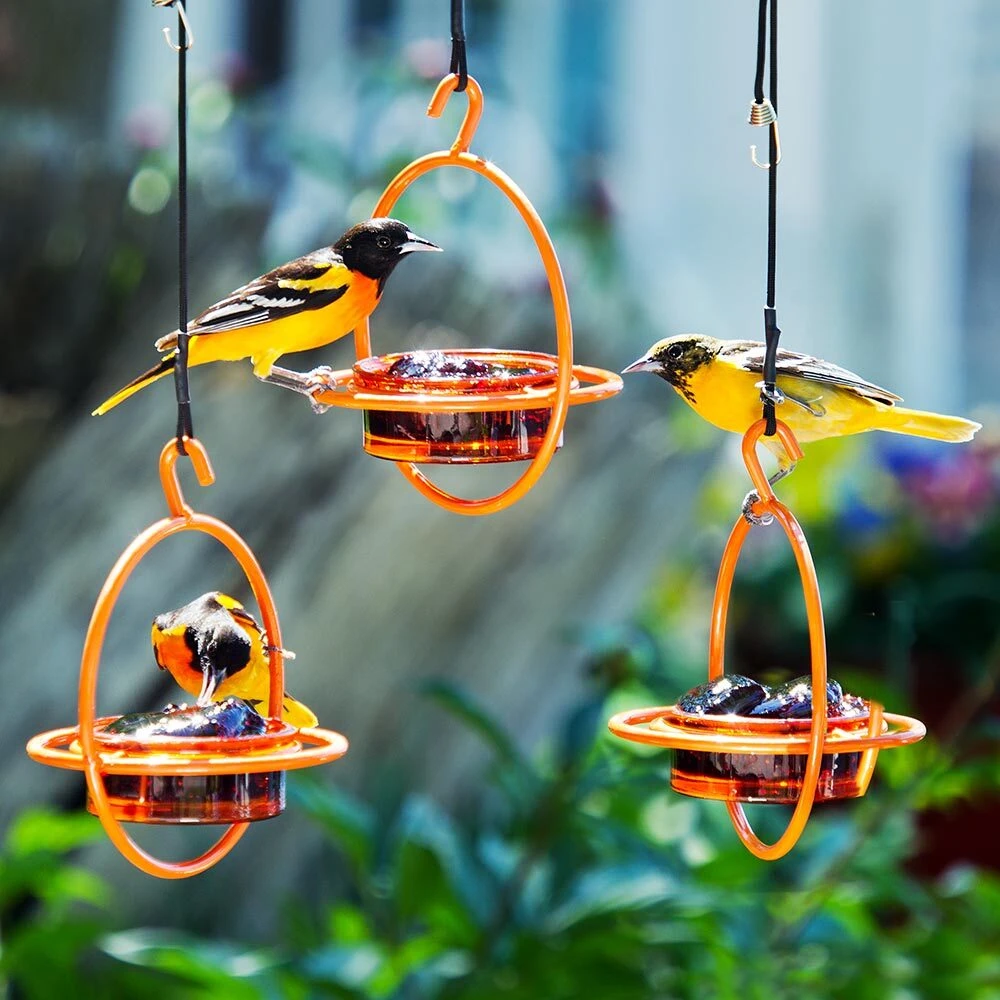
Anyone who has watched several birds arrive at the same small feeder understands the problem: one bird lands, another approaches, and before long someone gets chased away.
Providing multiple feeding locations can help distribute activity. With several Hummble feeders connected vertically or positioned around your yard, visiting bluebirds have more chances to reach the mealworms, and you have more opportunities to watch them comfortably.
You may see a bird perched comfortably at one feeder while another waits immediately above or below. During particularly active periods, several feeders can become miniature stages filled with blue feathers and activity.
It Is Not Only for Bluebirds
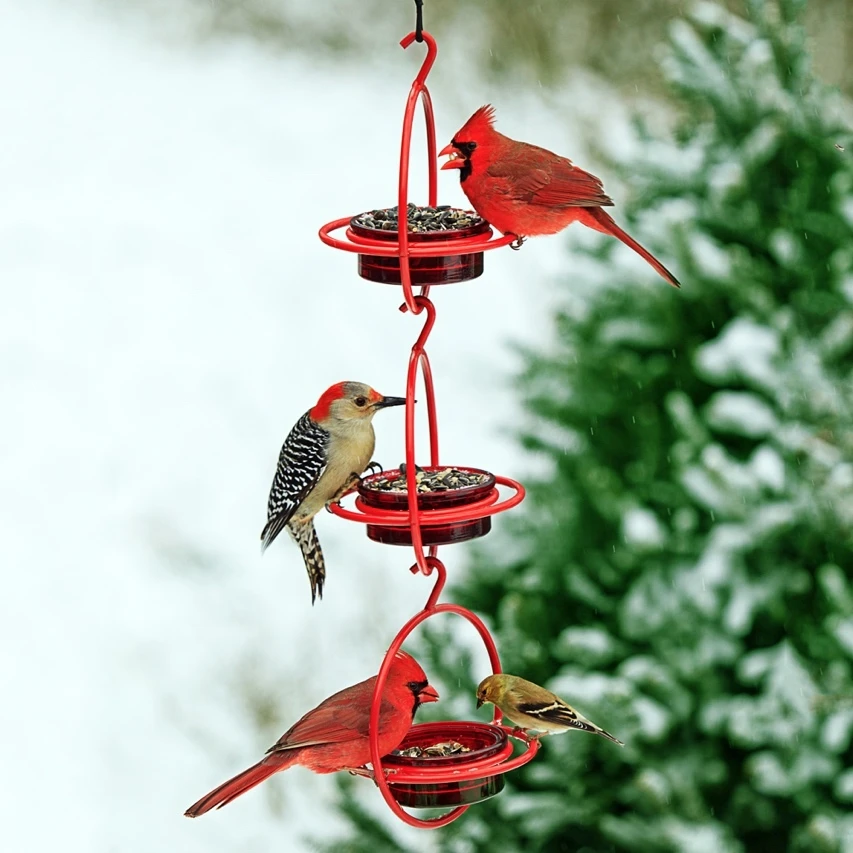
Bluebirds may be the stars of a mealworm station, but they are unlikely to be the only guests.
Mealworms appeal to numerous insect eating songbirds. Mosaic Birds' own bird feeding guide notes that bluebirds, chickadees, titmice, wrens, nuthatches, and starlings are among the species that may happily visit a dish of mealworms. Mosaic Birds Blog
Depending on where you live, your Hummble bird feeding station may quickly become one of the most interesting places in the garden.
That versatility makes it particularly useful for bird lovers who want to attract a broader variety of songbirds without maintaining several complicated feeder styles.
How to Introduce Bluebirds to Your Hummble Feeder
If bluebirds already visit your property, establishing a new feeding routine can be surprisingly simple.
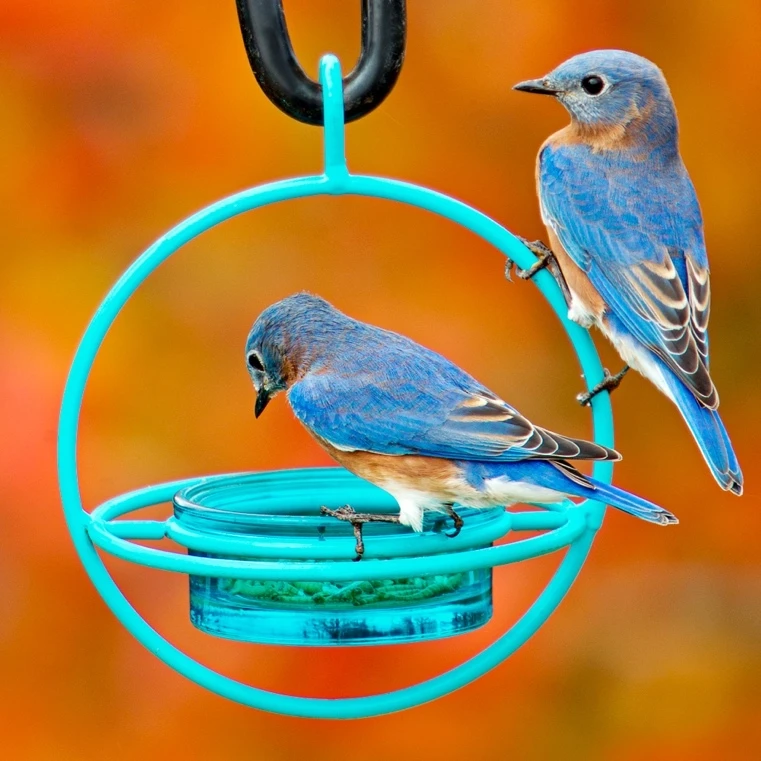
Place the feeder where birds can easily see it, preferably near the open areas, trees, fence lines, or perching locations they already use. Add a small quantity of mealworms, then stay consistent about where and when you serve them.
Bluebirds are observant.
Once they discover a dependable source of mealworms, they may begin incorporating your feeder into their daily routine.
If dried mealworms initially receive little attention, try adding several live mealworms to create movement and help visiting birds recognize the dish as a food source.
Then give them time.
The North American Bluebird Society notes that bluebirds already present in an area can learn to recognize a mealworm feeder as a dependable food source. North American Bluebird Society
Do Not Overfeed Mealworms
A bluebird enjoying a mealworm can make it tempting to keep refilling the dish.
Moderation is better.
Mealworms should supplement the insects, berries, and other foods bluebirds naturally find rather than becoming their entire diet. The North American Bluebird Society recommends mealworms in limited quantities as a supplemental food. North American Bluebird Society
Serving smaller portions also encourages birds to continue foraging naturally and helps reduce wasted food.
The goal is not to replace nature.
It is to give nature a little help.
A Beautifully Simple Feeder for a Growing Bluebird Flock
The best bird feeder is one that works well for both the birds and the person caring for them.
For feeding mealworms, the Mosaic Birds Hummble Colorful Feeders brings together the features that matter most:
- An open design that gives bluebirds easy access
- A convenient perch surrounding the feeding dish
- A removable glass dish that keeps mealworms contained
- Simple cleaning and refilling
- Excellent visibility for bird watching and photography
- A slim profile that fits beautifully into the garden
- The ability to connect multiple feeders vertically as feeding activity grows
- Versatility for bluebirds and many other mealworm eating songbirds
That last advantage may become your favorite.
You can begin with one feeder for a visiting bluebird pair and expand your feeding station as parents bring young birds to the yard or additional songbirds discover the mealworms.
Simple, functional, expandable, and designed around an attractive glass-and-metal form, the Mosaic Birds Hummble Mealworm Feeder is a strong choice for anyone who wants to turn an occasional bluebird sighting into a regular backyard experience.
Fill the dish, hang it where you can see it, and join the flock.